A Digital Perspective on Water: My Ozwater 2026 Experience
Leonie Penaia reflects on her first Ozwater 2026 experience, exploring digital innovation, leadership, climate resilience and collaboration shaping the Pacific water sector.
Leonie Penaia (Samoa Water Authority)
7/16/20263 min read
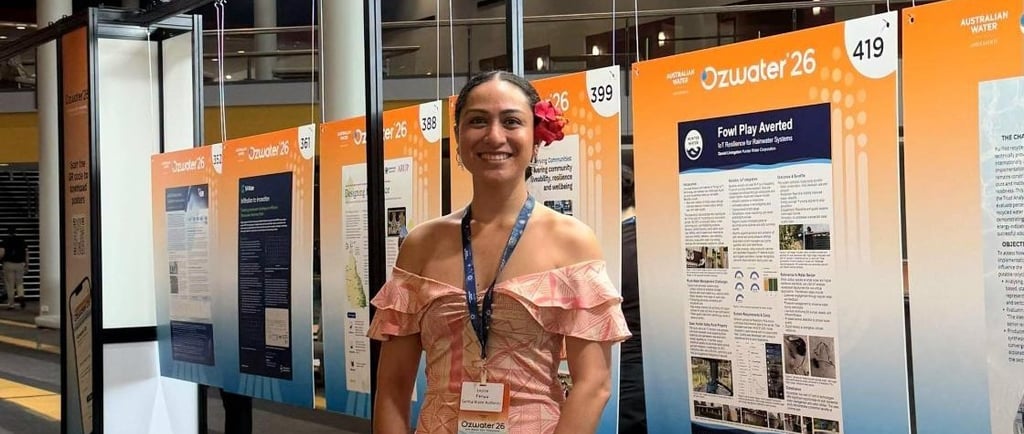
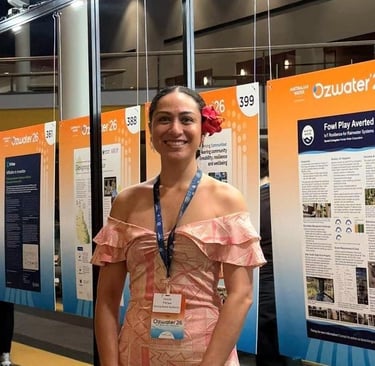
Samoa Water Authority's Leonie Penaia reflects on her first Ozwater 2026 experience, exploring digital innovation, leadership, climate resilience and collaboration shaping the Pacific water sector.
Attending Ozwater 2026 was a meaningful experience for me, both professionally and personally. Being my first time attending a conference of this scale, I was exposed to a wide range of discussions, technologies, and perspectives across the water sector.
One of the main things that stood out to me was how quickly the sector is evolving through the use of data, digital technologies, and artificial intelligence. Coming from an ICT background, I found many of the sessions especially relevant as they showed practical ways technology is being applied to improve decision-making, operations, and planning within water utilities.
The Young Water Professionals Program was a key highlight. The disaster management simulation was quite challenging as it required us to think from different stakeholder perspectives, including utilities, government, and communities. It highlighted how complex decision-making becomes during emergencies, especially when coordination and communication across stakeholders is critical. The leadership and networking sessions also reinforced the importance of mentorship. Many of the young professionals currently do not have formal mentors, and this stood out as an important gap in supporting confidence, guidance, and career development.
I also found the international development stream of Climate Resilience and Leadership workshops insightful, as they provided broader discussions around workforce development, governance, and strengthening resilience within the water sector. Although some of the content was outside of my direct System/CIT Administrator role, I made an effort to relate it back to Samoa Water Authority’s broader work and how different parts of water management are connected.
The Pacific Water Roundtable was another meaningful session, offering insight into regional challenges such as climate change impacts, funding constraints, and the importance of collaboration across Pacific utilities and development partners. It was encouraging to hear different Pacific perspectives and to see the strong emphasis placed on ensuring Pacific voices are included in regional and international discussions. A key reflection from this session was the need for stronger collaboration, data-driven decision-making, and sustained partnerships in addressing Pacific water challenges.
Another part of the program I found very valuable was the opportunity to network with other Young Water Professionals, utility representatives, and experienced water sector leaders from across the Pacific, Asia, and Australia. As this was my first time attending Ozwater, it gave me a good opportunity to build professional connections, learn from others’ experiences, and better understand the different challenges and priorities across the region.
The Australian Water Partnership workshop was particularly insightful. The simulation exercises, similar to the YWP program, placed participants in realistic decision-making scenarios involving multiple stakeholders, which were quite challenging. It highlighted how quickly issues can arise when roles are unclear, priorities differ, and decisions must be made under pressure. A key reflection for me was the importance of clear communication, defined roles, and understanding different perspectives to avoid delays and misalignment in decision-making, especially during crisis situations. The discussions around funding, politics, and engagement in water development also stood out, particularly in how utilities work with partners and navigate external support.
One of the strongest messages I took away from the week is that while the water sector is becoming increasingly digital and data-driven, long-term success still depends on leadership, collaboration, communication, and investment in people.
From a Young Water Professional perspective, I believe programs such as this are extremely valuable for developing future leaders within the sector. The combination of technical sessions, workshops, networking opportunities, and exposure to regional discussions provided a well-rounded experience. Continued support for participation in these types of programs, as well as ongoing opportunities for mentoring, knowledge sharing, and professional development, would be beneficial for young professionals across the Pacific.
Overall, I am grateful to AWA, AWP, PWWA, and the program organisers for providing this opportunity. As a first-time attendee, the experience broadened my understanding of the water sector, strengthened my professional network, and gave me new perspectives that I can take back to SWA and apply in my ongoing development as a Young Water Professional. It is also a reminder that water is life, and that continued collaboration and advocacy across the sector remain essential for the future.